Geelong Running Festival
Competitive and Beginner friendly and Social and Fast and Scenic
Road


Sun 20 Sep 2026

5 Aug 2026 • 9 minutes read


Hydration is a daily habit, not a race-day job, and the daily part is where most of us slip. We asked Accredited Practising Dietitian & Nutritionist, Grace Liebelt, what runners get wrong about everyday hydration.
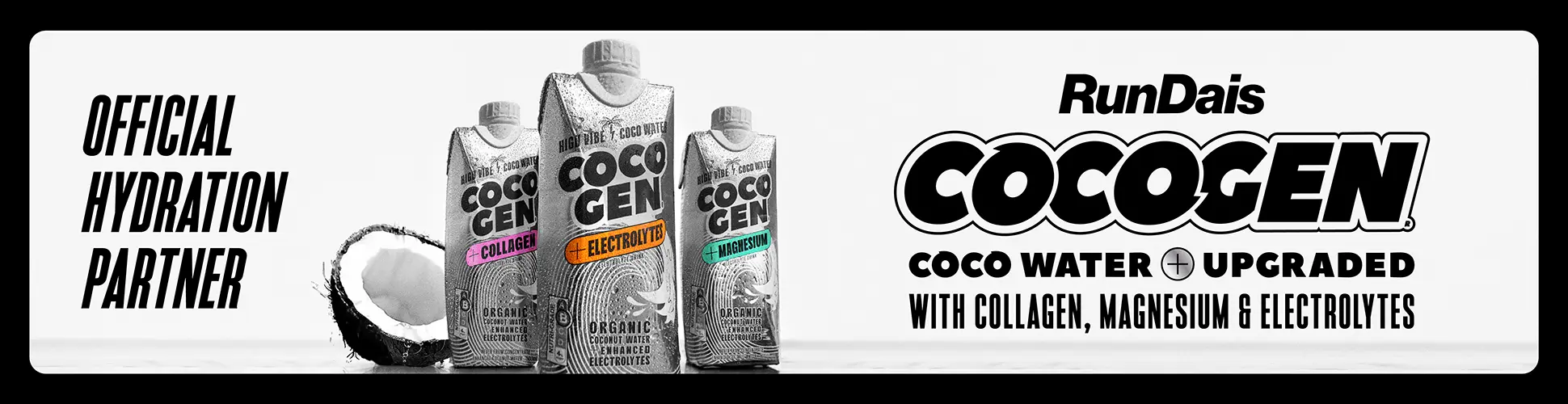
This article is brought to you in partnership with Cocogen, the official hydration partner of RunDais.
Most of us only think about hydration once the run’s done. We finish, drink as much as we can hold, and call it sorted. It isn’t, quite. Feeling strong and recovering well has less to do with that one big glass than with what you drink on the ordinary days, long before you hit the pavement.
Grace Liebelt says “Hydration starts way before the run; it is accumulative across your week. If you are feeling thirsty, this is a sign that you’re already behind the eight ball. Like carb loading, how much you drink the day before a race matters just as much as what you have on the day.“

When you sweat, you lose water and electrolytes. Electrolytes are minerals like sodium, potassium and magnesium, and they’re the reason plain water doesn’t always do the job on its own. They help your body hold onto the fluid you drink and put it where it’s needed. Drink litres of plain water after a big sweaty session and a lot of it just passes straight through.
On an easy thirty minute jog in mild weather, those losses are small and water covers it fine. Go longer, hotter or sweatier, and the balance shifts.
You don’t need a watch to tell you this, your body already gives you the signs (you just need to know what to look for).
The easiest signal is the colour of your urine. Pale, roughly the shade of watered-down apple juice, means you’re in good shape, while dark yellow means you’re behind and should drink. It’s crude and it’s free, and it beats waiting until you feel thirsty.
“Thirst is a reminder to drink. Not an early warning. Hydrated runners preventatively sip before they even feel the need to drink” Grace says.

Feeling flat, foggy or heavy-legged partway through a run you’d usually cruise can point to hydration as well, though it’s rarely the only cause. Read the signals together rather than betting on any one of them.
Water does the job most of the time, whether that’s a walk to work or an easy few k’s. You don’t need anything more for that.
“Water makes up 70% of our bodies, and a large portion of our blood. When our blood lacks sufficient water, it moves slower, meaning it takes longer for our working muscles and brain to get the energy and oxygen they need to function” Grace says.
“If you’re sweating heavily or running for 90 minutes or more, this is the perfect opportunity to supplement with electrolytes. If you aren’t replacing them, that can contribute to feeling flat and underperforming in the latter stages of your run or race.“
A functional drink fills that gap, putting back some of what you sweat out instead of just topping up fluid. The trouble is that most sports drinks do it with a load of sugar and artificial colours and flavours, which isn’t what many of us want day to day.
Coconut water skips all that, which is part of why it took off. Cocogen isn’t really a running drink. It’s an everyday one, organic coconut water with electrolytes, magnesium or collagen depending on which you pick, never from concentrate and nothing artificial. It just happens to tick the boxes runners care about.

You can also overdo plain water, especially on a long, hot run when you’re sipping constantly just to be safe.
“It’s all about the fluid balance. Sometimes too much water can lead to overhydration, which can cause gut issues and discomfort during your runs. So, the goal is having enough to keep you in that happy hydration state” Grace says.
For everyday running, this isn’t worth stressing over. It mostly matters on long, hot, sweaty efforts, and it’s why electrolytes matter as much as the fluid does. Drink to your thirst and the conditions, not to a number you feel you have to hit.
Hydration isn’t only what’s in your bottle. Roughly a fifth of most people’s daily fluid comes from food, and fruit and veg like watermelon, oranges, cucumber and tomatoes are basically water you chew.
The drink everyone worries about is fine too. Your morning coffee counts, and the idea that it dehydrates you is overblown, at least at normal amounts. A couple of cups a day sits inside your daily fluid, not against it.
None of this replaces water when you’re working hard and sweating. But on an ordinary day, staying hydrated is less about forcing down glasses and more about eating well and drinking regularly without overthinking it.

The people who never think about hydration have made it automatic, so there’s no scramble before a run.
Keep water within reach so drinking isn’t a task, and have some with each meal. Turn up to your longer or hotter runs already topped up, and after a hard one, put the fluid and electrolytes back together, ideally over a meal.
Sweat rate is personal too. You might lose far more than your training partner on the same run, and everyone sweats more in heat and humidity, even in winter under a few layers. If you want to get specific, weigh yourself before and after a long run. Every kilo you’ve dropped is roughly a litre of fluid to put back.
Water handles most of it. Something like Cocogen earns its place at the edges, after a long or sweaty run when you’re properly depleted, on a hot day, or any time you want electrolytes without reaching for something sugary.
“Coconut water is a great natural post-run hydration option for those opposed to traditional sports drinks. Packed full of electrolytes, this is an excellent addition to pair with your protein-rich snack post-run to support overall recovery and re-hydration” Grace says.
To put any of this to work, start small. Sort your everyday drinking, use your urine as a check, and add electrolytes when the run is long or the day is hot. Swap your after-run drink for a fortnight and see whether you’re less flat by Friday.
Grace Liebelt is a Accredited Practising Dietitian & Nutritionist at Grams of Health. Made in partnership with Cocogen. General information only, hydration needs vary from person to person and with conditions, so adjust as you go, and see your GP if you have any medical concerns. Cocogen’s functional range is described by its ingredients, not a specific health claim.
Checkout some of these upcoming races across Australia:







Every event, every review, every club you love. Start your free RunDais account and keep it all in one spot.