Last updated: 10 November, 2026

That dull ache along your inner shin is often a sign of doing too much, too soon. Here’s what shin splints feel like, what causes them, how to treat and prevent them, and when it’s time to see a professional.


What are shin splints?

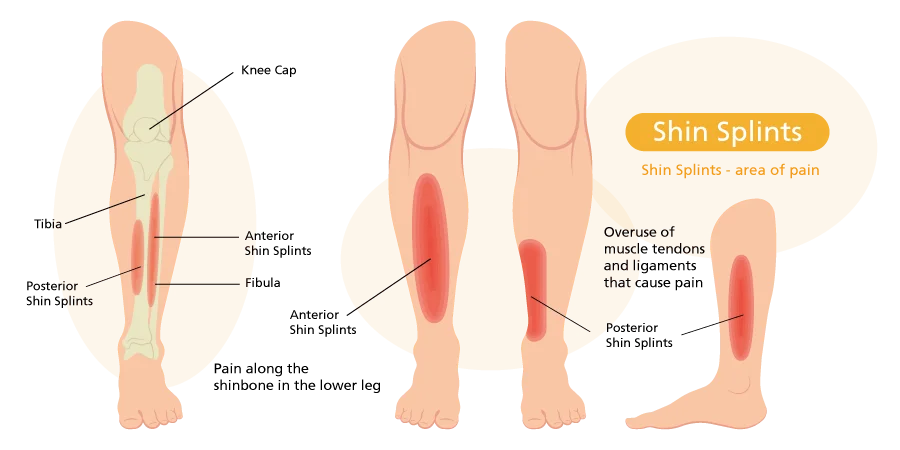
Shin splints, medically known as medial tibial stress syndrome (MTSS), are an overuse injury causing pain along the inner edge of the shinbone (tibia) 1. They occur when muscles, tendons and bone tissue become inflamed from repetitive or rapidly increasing stress during physical activity.

What do shin splints feel like?

The sensation of shin splints typically follows a frustrating progression. The hallmark of MTSS is a dull, aching pain along the inner part of the lower leg. In the early stages, the pain might be felt during a warm-up and fade during your run. However, as the tissue becomes more irritated, the ache stays throughout your workout and the area becomes distinctly tender to press 2.

What do shin splints look like?

Visually, shin splints can be deceptive. Often, there is absolutely nothing to see on the surface of the leg. In some cases, you might notice slight swelling or mild redness along the lower inner leg.
How do shin splints differ from a stress fracture?

It is important not to confuse the two. “The key difference is the pain pattern,” notes a sports physiotherapist from the American College of Sports Medicine (ACSM). “Shin splint pain is usually diffuse, spanning several inches along the bone. A stress fracture presents as sharp, localised, pinpoint pain in one specific spot that hurts even when you are just hopping on one leg.”3

What causes shin splints?

The primary culprit is almost always doing “too much, too soon.” When you suddenly increase your training load, the bone and tissue don’t have time to adapt to the new stress. Common triggers include:

  • Running on hard surfaces: concrete or asphalt are unforgiving without adequate shock absorption.
  • Old shoes: is it time to replace yours? Most shoes will last 450 to 800km.
  • New pace or terrain: suddenly changing your pace, terrain or weekly frequency (to keep up with a group).
  • Increasing distances: a rapid spike in long-run distances required for specific endurance events.
  • Previous shin splints: You’re also more at risk if you’ve had shin splints before, are female, are newer to running, carry more weight or have flatter feet 4

How long do shin splints last?

Mild cases caught early may resolve within two to four weeks if you actively rest and reduce impact. When the condition has been present for longer, recovery can take considerably more time, sometimes months to fully resolve.5

Dealing with a recurring issue? Read our existing article: Shin splints keep coming back? Here’s how to fix the root cause.

How to treat shin splints

If you are wondering how to treat, fix or get rid of shin splints, you need a multi-faceted approach to calm the inflammation and rebuild tissue tolerance. Follow these steps:
  1. Rest from the trigger: adjust your training load temporarily. You do not necessarily need to stop moving entirely, but reduce the volume and intensity of running while staying active with movement that doesn’t aggravate symptoms, such as swapping running for low-impact cross-training like swimming, cycling or deep-water running.
  2. Ice: apply ice packs to the tender area for 15 to 20 minutes, 3 to 4 times a day, especially after any activity, to reduce localised inflammation.
  3. Calf work: tight calf muscles pull on the shinbone. Incorporate gentle, pain-free calf stretching and progressive eccentric calf strengthening exercises to build tissue resilience. Greater muscular capacity means less load transferred to the tibia during running, reducing both pain and risk of re-injury.6
  4. Shoes: evaluate your footwear. If your shoes are worn out, replace them. Consider getting a gait analysis at a specialty running store to ensure you have the right support for your foot strike.

A quick note on taping

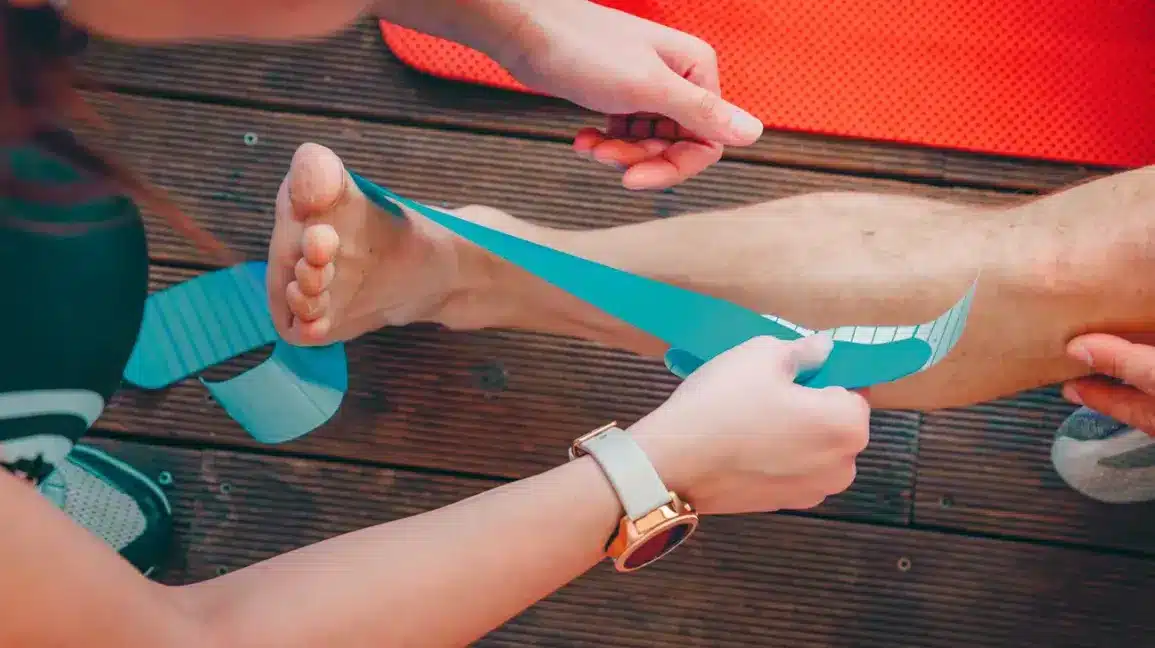
Kinesiology taping can be a helpful short-term tool to offload the muscles and provide sensory feedback, potentially reducing pain during daily walking.7
How to prevent shin splints

Once you are pain-free, the goal is to keep them from returning.

  • Increase distance gradually: the “10% rule”8 is a popular guide, but research in new runners found it didn’t reduce injuries on its own. Change one thing at a time (distance, pace, terrain or frequency) and treat any shin soreness as a signal to hold steady.
  • Track your shoes: keep a log of your kilometres and replace shoes before the cushioning breaks down.
  • Choose softer surfaces: mix up your routes. Swap some of your concrete road runs for grass, dirt trails or a rubberised track to reduce repetitive impact forces.
  • Do not ignore the first niggle: the moment you feel that familiar dull ache, take an extra rest day. Pushing through the first niggle is the number one reason a minor irritation turns into a months-long injury.
  • Keep your calves strong and mobile: two or three sessions of calf raises a week, plus checking your ankle range with the knee-to-wall test, are simple habits that help your lower legs handle more running.

When to see a podiatrist, physio or doctor

Get it checked if you notice any of the following:

  • Pain that wakes you at night, or is there first thing before you’ve moved.
  • Tightness, burning, numbness or tingling in the lower leg during runs that eases when you stop. This needs checking for exertional compartment syndrome.
  • Pain at rest and no improvement after two weeks are standard red flag for stress fracture and bone pathology.9

A physiotherapist or sports medicine doctor can provide a definitive diagnosis, rule out stress fractures, and prescribe a targeted, progressive loading program to get you back on the road safely.


For runners looking for targeted relief and a faster return to training, the clinically validated Solushin® orthosis is designed to help with both.


  1. Fallon 2023; Moen 2009 ↩︎
  2. Fallon 2023; Moen 2009 ↩︎
  3. Moen 2009 and Winters 2018; Warden 2014 ↩︎
  4. Moen 2009; Hamstra-Wright 2015; Fallon 2023: previous MTSS, female, fewer years
    running, higher BMI, flatter/pronated foot posture ↩︎
  5. Fallon 2023 ↩︎
  6. Madeley et al., 2007 ↩︎
  7. Griebert et al., 2016 ↩︎
  8. Buist 2008 ↩︎
  9. Fallon 2023 ↩︎
Jackson Koop
Written by Jackson Koop
2 articles • Since 2026

Jackson Koop is the Clinical Specialist for Solushin. With his own sporting background, his special interests in musculoskeletal injuries, sports rehabilitation and working with chronic pain management gives him the technical and lived expertise and the clinical depth of knowledge to provide the best possible outcomes for patients.

View all articles
The home of Australian running

Your running life, all in one place

Every event, every review, every club you love. Start your free RunDais account and keep it all in one spot.

Log your events Review events Save what's next Find your pack