Inverloch Running Festival
Fast and Scenic
Road/Path

Sat 28 Mar 2026
1 Dec 2025 • 23 minutes read
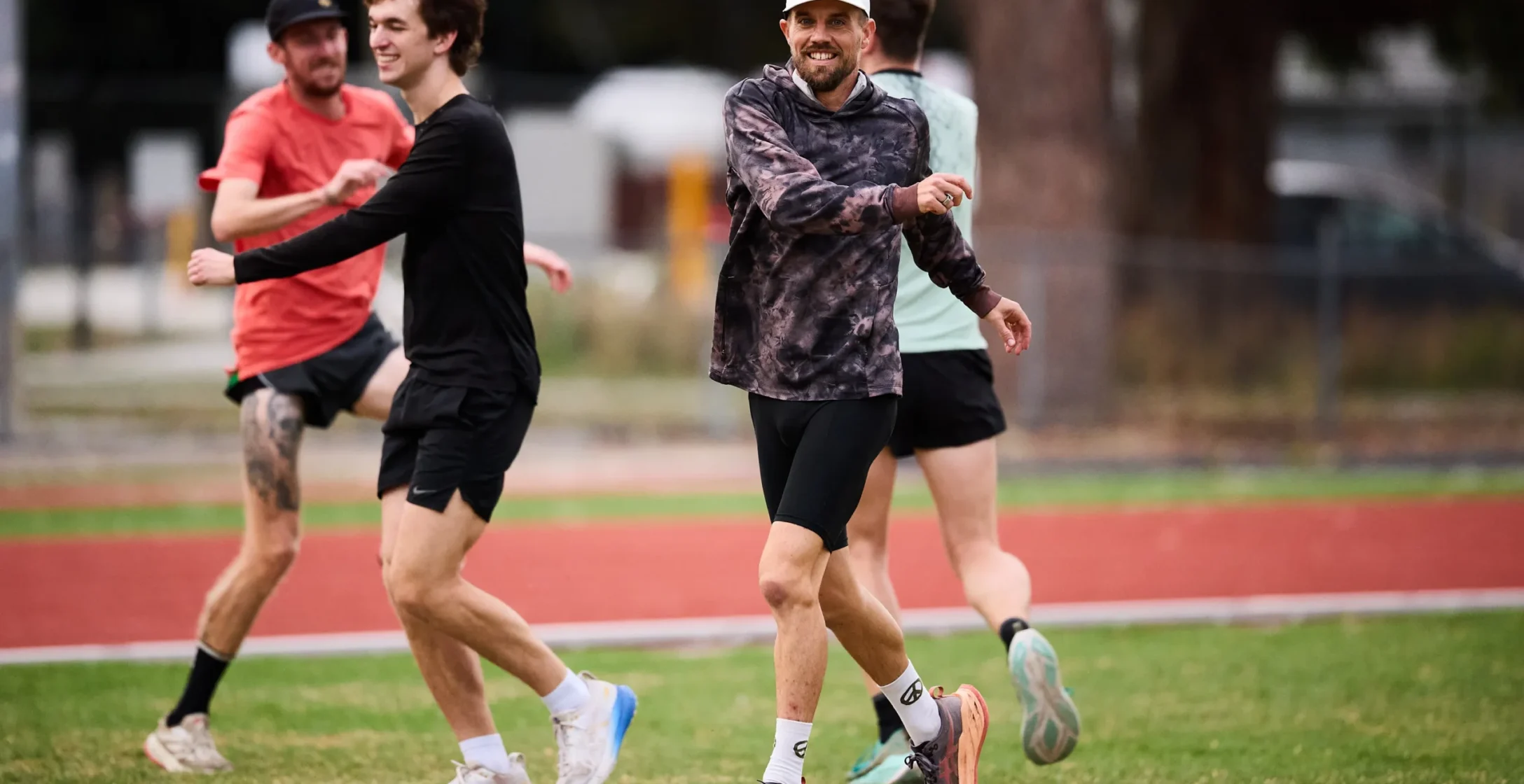
After 16 years as a physiotherapist, having seen thousands chase health, performance, and fulfilment, I can say this with absolute conviction:
The people who truly get better in rehab, in sport, and in life share one rare trait.
It’s not talent.
It’s not motivation.
It’s not even grit.
It’s equanimity; the ability to stay calm in chaos, steady when the storm hits.
Equanimity is emotional strength. It’s mental skill. It’s a trainable state of mind (Gunaratana, 2011).
You see it in the eyes of the greats like Eliud Kipchoge, Nick Willis, Jemima Montag, Mike Smith, Jessica Hull. They don’t just run or coach well. They move through life well.
After a good race, a bad race or an injury setback: no drama, no panic. Just presence. They care deeply… but they don’t cling tightly.
That’s equanimity.
And it might just be the most underrated competitive edge in existence.
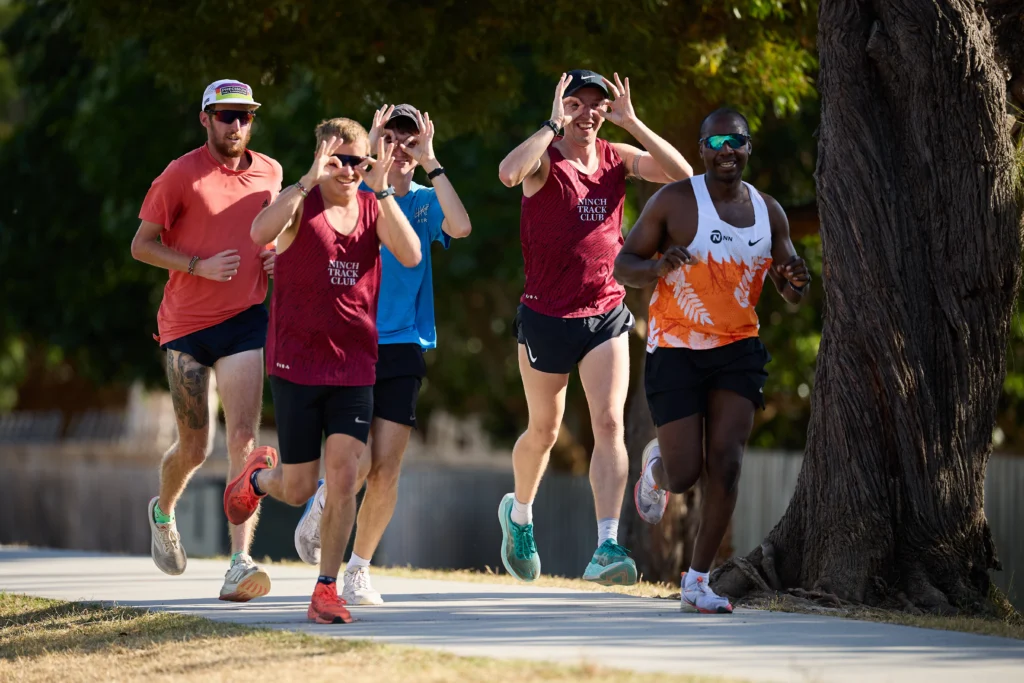
Equanimity is a state of calm amidst chaos. The ability to feel the full storm of human emotion, to “notice the pull of aversion or wanting, and still respond rather than react” (Salzberg, 1995).
It’s what allows someone to stay centred when things don’t go to plan. To feel disappointment, elation, frustration, or fear, but not be ruled by it.
It’s not indifference, apathy, or detachment.
Equanimity is “caring deeply without clinging tightly.” (Salzberg, 1995)
It’s a quiet strength that lets you meet reality as it is, not as you wish it to be.
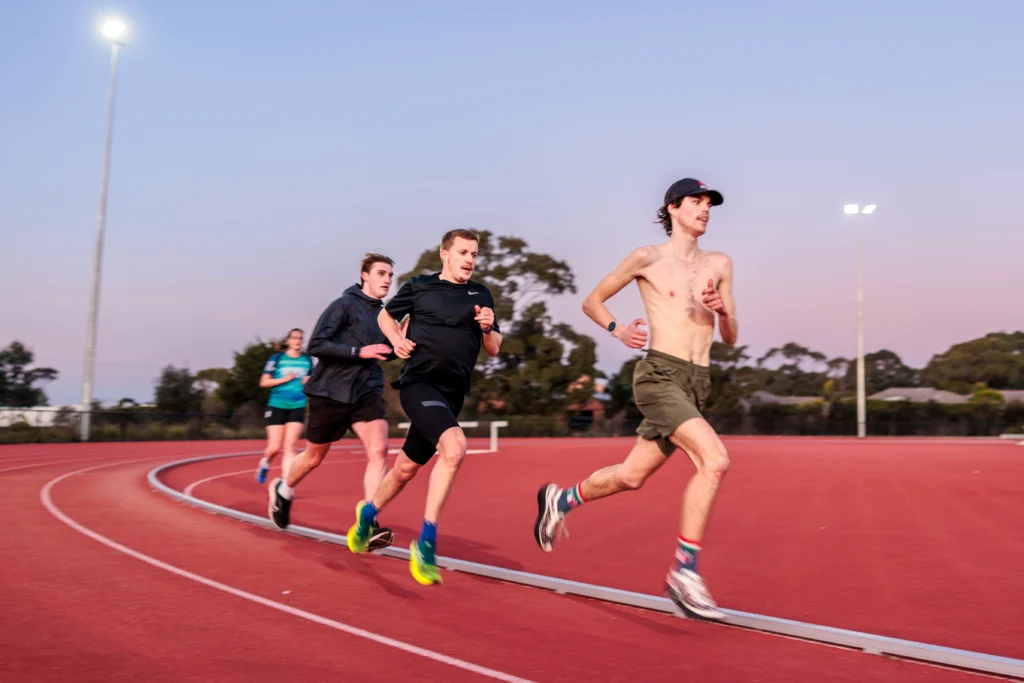
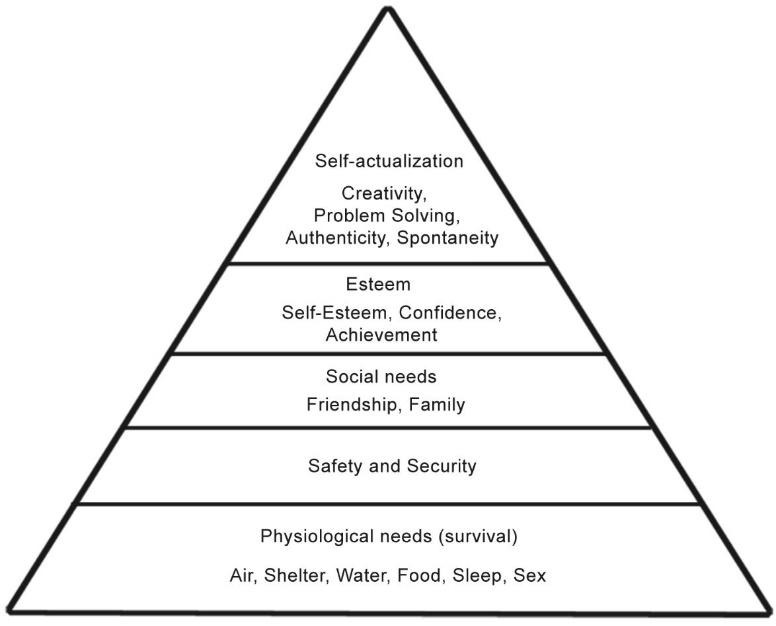
Psychologist Abraham Maslow described people who reached “self-actualisation” were those who live with equanimity: purpose, presence, and peace (Maslow, 1954).
They share a few powerful traits:
In other words, they let go.
They don’t get caught up in ego, comparison, or outcomes. Their sense of worth isn’t tied to numbers, medals, or rankings. They simply do what they do best and let the results take care of themselves.
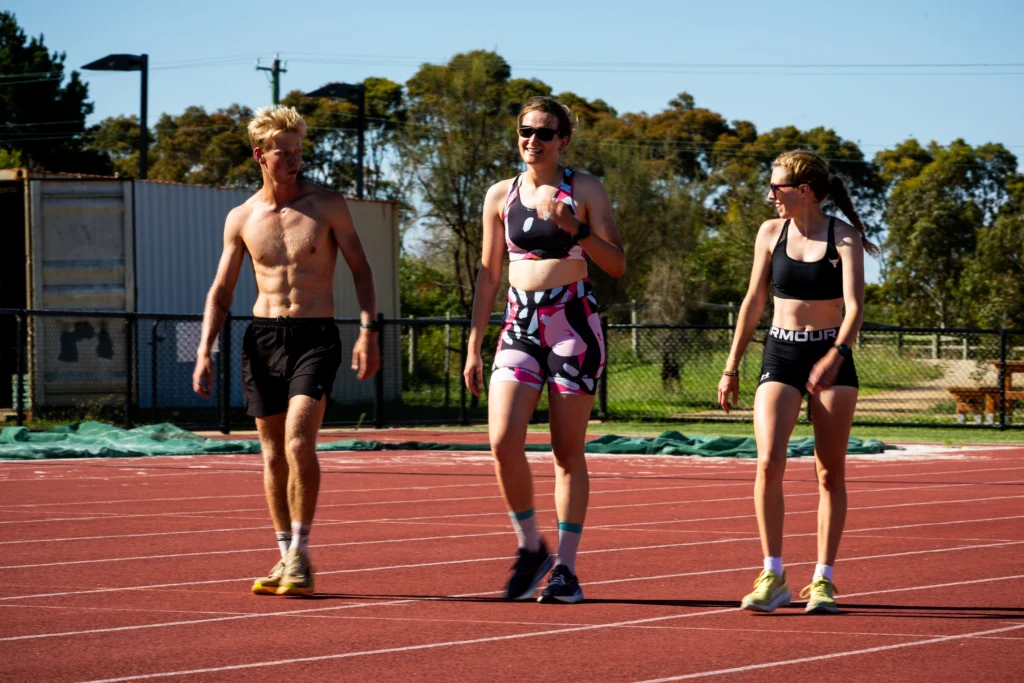
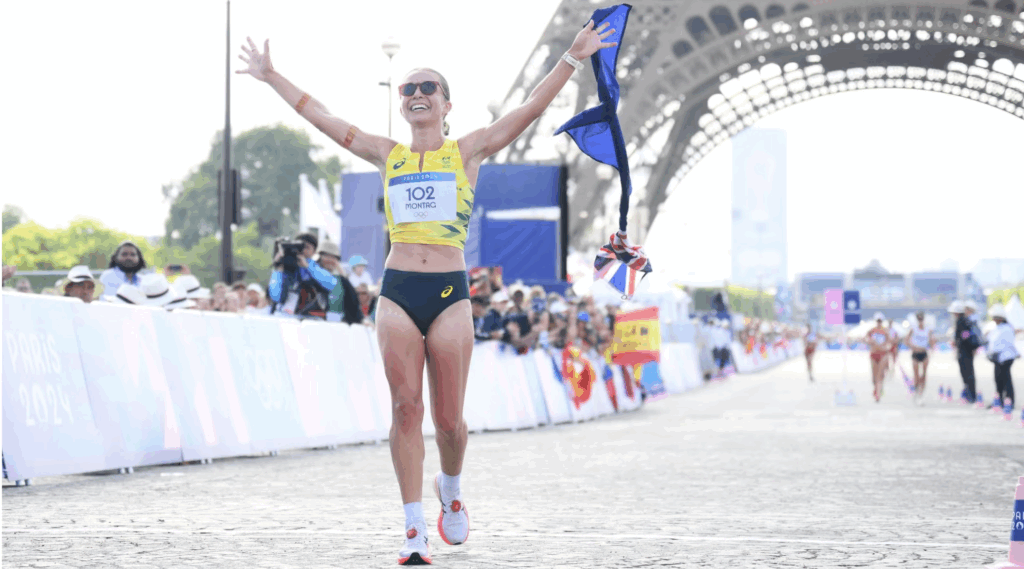
Jemima Montag, Australia’s 2024 Paris Olympian in the 20 km walk, is a textbook example of equanimity in sport. At the Games, she won the bronze medal, but what she said afterward reveals just how she approached her performance:
She had to be “okay with not meddling to medal.”(Montag, 2024)
What she meant was profound: she had to detach from the outcome. Montag understood that she couldn’t control anyone else’s performance, only her own. By letting go of fear, expectation, or pressure, she allowed herself to compete freely, with focus and grace.
Her approach wasn’t about caring less, it was about caring wisely. She gave everything she had, without letting the result define her worth. The medal came because she had done her best; if her best had fallen short, she still would have been fulfilled knowing she had approached the race with intention and composure.
This mindset and focus on effort, not attachment to outcome, is the essence of equanimity. Montag’s performance shows how letting go of control over things we can’t influence doesn’t weaken us; it frees us to perform at our best.
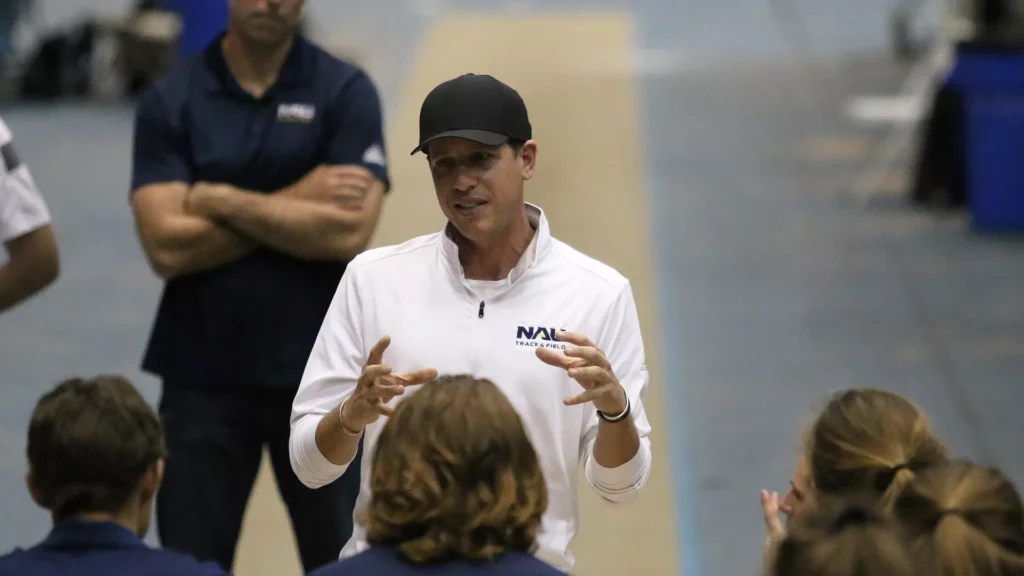
“It’s not how fast you run – it’s who you become trying to see how fast you can run.” (Smith, 2025)
Under Coach Mike Smith’s leadership Northern Arizona University men’s Cross Country team claimed multiple NCAA titles – yet winning was never the focus. “We don’t talk about winning championships. We talk about executing a great team race in moments that matter.” (Smith, 2023).
Smith built a culture centred on fostering; community, connection and belonging. He focused on helping athletes learn about themselves, appreciate their teammates and encouraged consistency…put simply, Smith coached his athletes to ‘become better humans first and foremost’. “When I look at an athlete…how they feel about themselves, where they are in their lives- that’s what is going to show up on the track way more than the training.” (Smith, 2024)
Smith always encouraged his athlete’s to; “just focus on the next logical step” grounding performance in presence, not pressure (Smith, 2023, 2025). Subsequently, building a dynasty defined by calm strength.
Smith’s legacy shows that when you grow the person, the results take care of themselves, this here is the essence of equanimity in action.
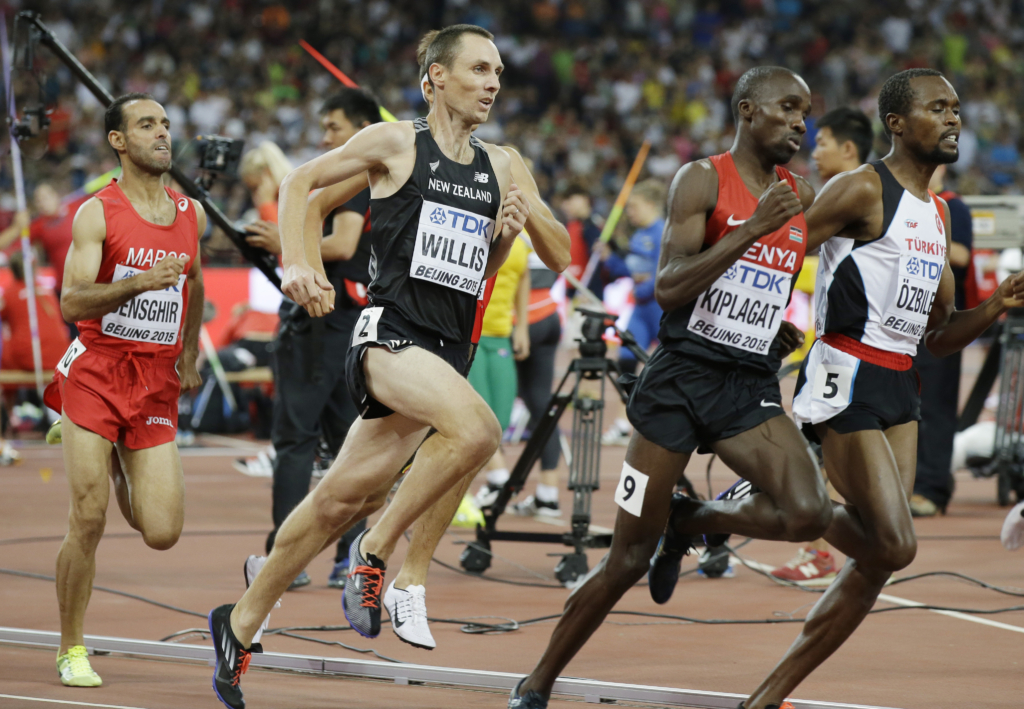
Next there is Nick Willis, the five-time Olympic 1500m runner from New Zealand. Over a professional career spanning more than two decades, he’s achieved multiple Olympic medals, national records, and consistently performed at the highest level.
When journalists asked him what he thought was behind such a long, successful career, his answer was surprisingly simple: ‘he prioritized rest and recovery’ (Willis, 2022)
In a sport where every coach, every sponsor, and every competitor seems to be telling you to train harder and push further, Nick made a conscious choice to take care of himself. He allowed one day off per week, respected his body, and embraced the softer side of running.
This wasn’t laziness or a lack of ambition. It was strategy. By listening to his body and mind, he avoided burnout, stayed motivated, and kept performing at an elite level for years.
In many ways, this is equanimity in action: the ability to hold ambition and effort lightly, to respond wisely to the demands of the sport rather than reacting impulsively to pressure, and to balance intensity with stillness.
Nick’s career is a powerful reminder that sometimes the competitive edge isn’t how much you train, but how well you pause, recover, and care for yourself along the way.
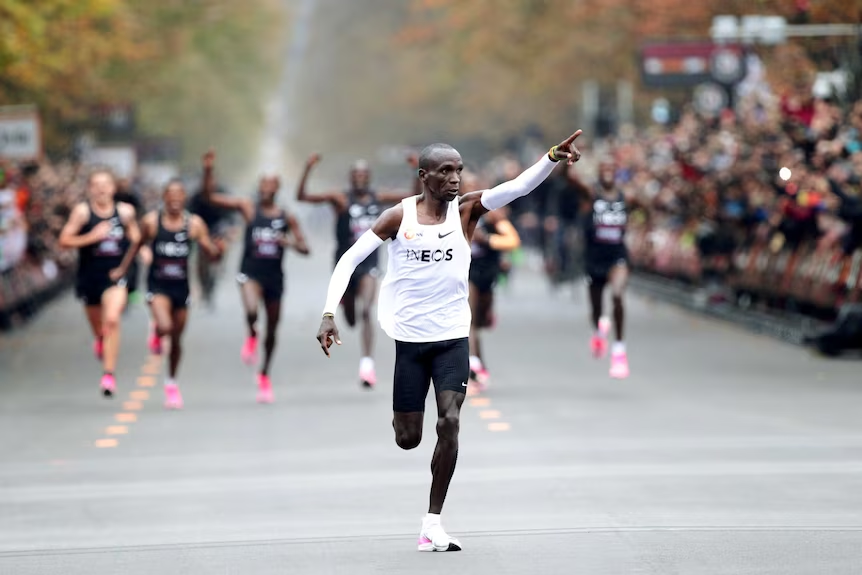
Eliud Kipchoge is essentially the ‘Yoda’ of modern-day distance running, he is a ball of wisdom. His mindset is a huge part of his success over such a long time in the sport. He has won 16 of the 21 marathons he has participated in and in 2019 was the first runner to ever break 2 hrs for the marathon (World Athletics, 2019).
At the height of his career when he broke the 2 hr marathon, a mark that was previously deemed impossible, he was famous for saying: “No human is limited” (Kipchoge, 2019). He really did want to inspire others through his performance: “The world is actually full of challenges and we need to challenge ourselves” (Kipchoge, 2019).
Success also didn’t change him; he still lived at the same training camp in Kenya, and he still did the same chores as the rest of the athletes. “If you are humble, your concentration will be very high. That’s the way to go in sports” (Kipchoge, 2019).
After finishing 8th at the 2020 London Marathon (his first defeat in some years): “I’m really disappointed but this is sport. It’s what normally happens in sport. … It’s not the end of the world” (Kipchoge, 2020). Despite having so much attention and media pressure, Kipchoge didn’t fear failure, he didn’t feel any less worthy; he understood that failure is a crucial part of life and growth.
Recently, Kipchoge finished 9th at the 2025 Sydney Marathon, far from his personal best. Journalists were asking him if he thought he should retire from competitive marathoning. Most runners would be outwardly frustrated, disappointed, maybe even angry at themselves. Not Kipchoge. He stayed calm, focused on the bigger picture, and said:
“I’m happy to cross the finish line. I have nothing to prove. My mission is to bring people together” (Kipchoge, 2025).
Jessica Hull, Australia’s 2024 Olympic silver medallist and multiple national record holder, embodies and percolates a deep love for her sport, her competitors, and mastery.
With her big smile, Jess’s body language radiates immense presence and joy when she competes. Competition, for Hull, is “not an expectation but an opportunity” (Hull, 2024a). A chance to express herself. “It was just a free swing … I get to enjoy the stadium and the moment, that makes it really free and that’s a very dangerous athlete when they’re just running with freedom” (Hull, 2025a).
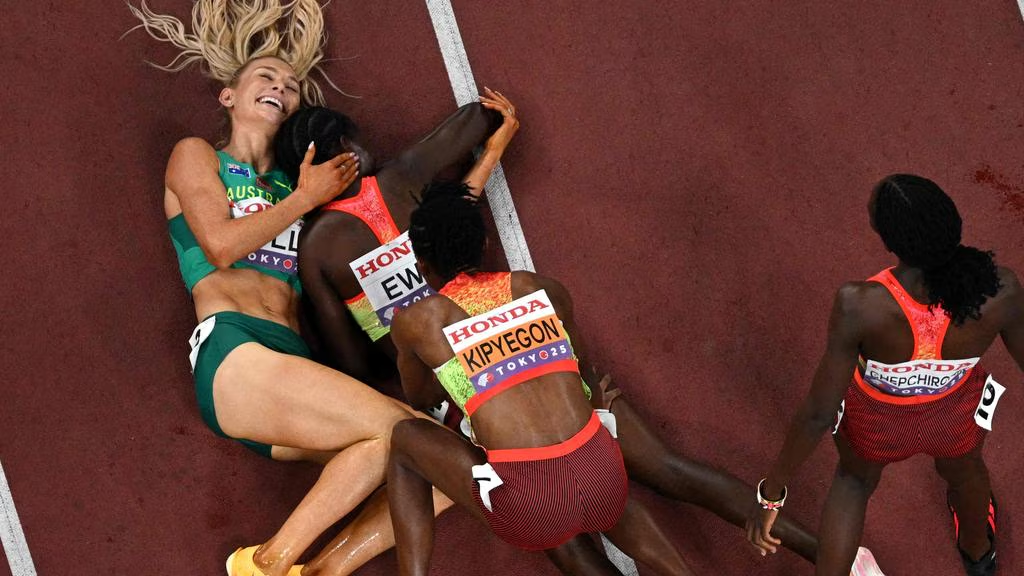
She shows incredible compassion to her competitors; smiling, laughing, hugging, congratulating, consoling, and just sharing the moment with them. When speaking about her biggest rival Faith Kipyegon (multiple WR Holder and Olympic Champion), Hull said: “She’s raised the bar so high that we’ve had no choice but to get better. It’s been really cool to be part of the sport while she’s been in it” (Sportshounds, 2025). No envy. No ego. Just pure respect, inspiration, and a ceaseless curiosity.
Jess loves the process of mastering her craft: “I truly do love the process of training and working on trying to get a little bit better every day, executing the training loads is never something I think twice about” (Hull, 2024b). For Jess it’s ultimately about personal growth. “Ultimately, I want to get the most out of myself so I can look back one day and be satisfied with the effort I put into my training and preparation. No regrets” (Hull, 2025b).
In contrast, the world we live in, especially in the West, conditions us to cling.
We’re taught that happiness lives in achievement, appearance, money, and status.
So we push harder. We accumulate. We chase the next hit of validation.
And sure, it feels good… until it doesn’t.
Soon, we’re left chasing more, caught in a perpetual loop of never enough.
Our self-worth gets tangled up in impermanent things, and when those things inevitably change. Beauty fades, jobs shift, performances dip, we suffer.
Taoism offers a beautiful counterpoint:
Be the sailboat, not the rowboat.
Move with the wind, not against it.
Lao Tzu. (2006)
The world is complex, interconnected, and impermanent. You can fight that, or you can flow with it.
True wisdom lies not in controlling every variable, but in learning how to navigate the ever-changing tides with grace.
What we truly crave isn’t status or success: it’s aliveness.
Those sacred moments where you feel grounded, fulfilled, immersed, harmonious.
Where your mind is clear, your heart is unburdened, and you’re part of something bigger than yourself.
That’s joy. Not the fleeting dopamine of achievement, but the deep nourishment of purpose and connection.
As Viktor Frankl put it:
“Don’t aim for success. Success ensues; it cannot be pursued.”
The key lies in values.
Values are the compass that guide how you live, act, and relate.
The best values are intrisically chosen, continuous, and within your control (Hendriksen, 2025).
When your actions align with your values, when your pursuits, relationships, and goals flow from them, life gains meaning (Holiday, 2016).
You are not your hobby, you are not your job, you are not your ego, you are your values!
Running can absolutely express your values.
But so can helping someone else reach their goal.
Or travelling somewhere new.
Or creating, learning, parenting, connecting.
The beauty is this: even if running is taken away from you, which often can be the case, your values remain.
You can still live them through other means.
That’s what frees you from attachment. That’s what builds equanimity.
Equanimity isn’t about being calm all the time; it’s about being steady, balanced, and responsive. The ability to stay grounded and move toward what matters, even when things feel messy or uncertain.
Acceptance and Commitment Therapy (ACT) developed by psychologist Steven Hayes, gives us five simple, practical ways to train that steadiness, like mental strength work for your mindset. Each skill helps you stay present, handle discomfort, and keep acting from your values rather than from fear or emotion. (For a great practical guide on ACT, see Russ Harris’ ACT Made Simple.)
Imagine you’re driving toward something important — maybe your next marathon, your next race, training session or simply being the kind of person you want to be. In the back seat are all your passengers: Pain, Fear, Doubt, Fatigue, Self-Criticism.
Acceptance means letting them ride. You don’t have to argue with them or kick them out; you just don’t hand them the wheel. You keep steering in the direction that matters.
Your thoughts and feelings are like chess pieces: some loud and powerful, others subtle or sneaky. When you’re fused with them, you’re down on the board, tangled up in the game.
‘Unhooking’ is stepping back and realising: you’re the chessboard itself. You can notice all the pieces, even the anxious or negative ones, without getting lost in them. From that perspective, you’re free to choose your next move calmly and wisely.
Your mind loves to time-travel, worrying about the finish line or replaying what went wrong last week. Mindfulness brings you back to the race you’re actually in: this breath, this stride, this step.
That’s where your best decisions, effort, and peace live. Right here.
Values are your compass, not a finish line. They give direction to your choices like courage, consistency, kindness, or growth.
Even when motivation fades or emotions surge, your compass keeps you oriented toward who and what really matters.
No matter the distance, every run and every change happens one step at a time. Committed action is taking small, purposeful steps guided by your values, even when things feel uncomfortable.
That’s how equanimity and confidence grow: not from avoiding struggle, but from moving through it with awareness and intention.
Equanimity isn’t just a way of running, it’s a way of living.
It’s the quiet confidence to hold your goals lightly, without letting them define your worth.
Because when you can care deeply without clinging tightly, you stop being tossed around by outcomes.
You move through life like that sailboat. Responsive, balanced, and at peace with the wind.
So next time you lace up, ask yourself:
Am I trying to prove something, or express something?
The first creates pressure.
The second creates peace.
Equanimity doesn’t mean caring less.
It means running free.
Steady, grounded, and fully alive.
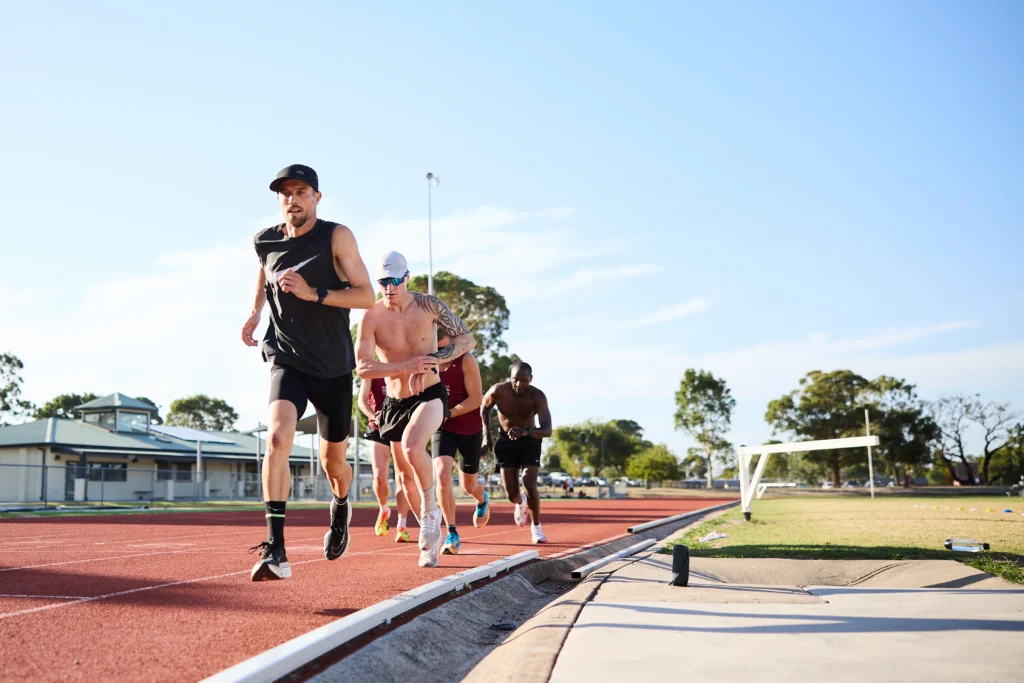
Dane is also a RunDais affiliated Coach and Physiotherapist. You can view more about his services on his profile here.
Find out more about Dane and the Owl’s on his podcast, listed in our recent blog on Australia Top Running Podcasts or on his website.
BBC Sport. (2020, October 4). Eliud Kipchoge: London Marathon champion says ‘it’s not the end of the world’ after defeat. BBC. https://www.bbc.com/sport
Brown, B. (2010). The gifts of imperfection: Let go of who you think you’re supposed to be and embrace who you are. Hazelden Publishing.
EJOLT. (2012, December). Needs [Diagram]. Environmental Justice Organisations, Liabilities and Trade (EJOLT). http://www.ejolt.org/2012/12/needs/
Frankl, V. E. (1959). Man’s search for meaning. Beacon Press.
Gunaratana, H. (2011). Mindfulness in plain English. Wisdom Publications.
Harris, R. (2019). ACT made simple: An easy-to-read primer on Acceptance and Commitment Therapy (2nd ed.). New Harbinger Publications.
Hayes, S. C., Strosahl, K. D., & Wilson, K. G. (2012). Acceptance and commitment therapy: The process and practice of mindful change (2nd ed.). Guilford Press.
Hendriksen, E. (2025). How to Be Enough: Self‑Acceptance for Self‑Critics and Perfectionists*. St. Martin’s Press. ([us.macmillan.com][1])
Holiday, R. (2016). The obstacle is the way: The timeless art of turning trials into triumph. Portfolio/Penguin.
Hull, J. (2024a). Competition is not an expectation but an opportunity [Interview]. Running Effect Podcast. https://www.runningeffect.com/podcast
Hull, J. (2024b). On loving the process of training [Interview]. Running Effect Podcast. https://www.runningeffect.com/podcast
Hull, J. (2025a). On enjoying the stadium and running with freedom [Interview]. Running Effect Podcast. https://www.runningeffect.com/podcast
Hull, J. (2025b). Reflecting on effort and mastery [Interview]. Running Effect Podcast. https://www.runningeffect.com/podcast
Kipchoge, E. (2019). No human is limited [Interview]. World Athletics. https://www.worldathletics.org/news/feature/eliud-kipchoge-marathon-record
Kipchoge, E. (2020). Post-London Marathon interview [Interview]. BBC Sport. https://www.bbc.com/sport/athletics/
Kipchoge, E. (2025). Post-Sydney Marathon interview [Interview]. Sydney Morning Herald. https://www.smh.com.au/sport/athletics
Lao Tzu. (2006). Tao Te Ching (S. Mitchell, Trans.). HarperCollins. (Original work published ca. 6th century BCE).
Maslow, A. H. (1943). A theory of human motivation. Psychological Review, 50(4), 370–396.
Montag, J. (2024). Post-race interview: Paris 2024 Olympic Games. Australian Olympic Committee Press Release.
Salzberg, S. (1995). Lovingkindness: The revolutionary art of happiness. Shambhala Publications.
Smith, M. (2023, April 10). Coach Mike Smith: Defining the mindset and culture of the NAU cross-country dynasty [Audio podcast episode]. In CITIUS MAG Podcast. CITIUS MAG. https://citiusmag.com/podcast/citius-mag-podcast-mike-smith-northern-arizona-university-cross-country-interview
Smith, M. (2024, December 12). Mike Smith on leadership, belonging, and becoming better humans through sport [Audio podcast episode]. In CITIUS MAG Podcast. CITIUS MAG. https://citiusmag.com/podcast
Smith, M. (2025, October 25). What it takes to build a dynasty: Mike Smith on systems, identity, and relentless growth in elite running [Audio podcast episode]. In The Running Effect Podcast. https://www.listennotes.com/podcasts/the-running-effect/what-it-takes-to-build-a-E6PwQLl3_ZY/
Sportshounds. (2025). Jessica Hull on Faith Kipyegon: Raising the bar in athletics. https://sportshounds.com/jessica-hull-faith-kipyegon
Willis, N. (2022). Interview: Longevity and the art of rest. Athletics New Zealand.
World Athletics. (2019). Eliud Kipchoge breaks 2-hour marathon barrier. https://www.worldathletics.org/news/press-release/eliud-kipchoge-sub-2-hour-marathon

Get the latest races, coaching tips, and running club updates delivered straight to your inbox.