Home / Blog / 7 Legendary Aussie Distance Running Workouts You Should Try
Training Tips
7 Legendary Aussie Distance Running Workouts You Should Try
Klay Hopgood
16 Feb 2026 • 18 minutes read
?>
Last updated: 1 April, 2026
Australia has a deep love and history in long distance running.
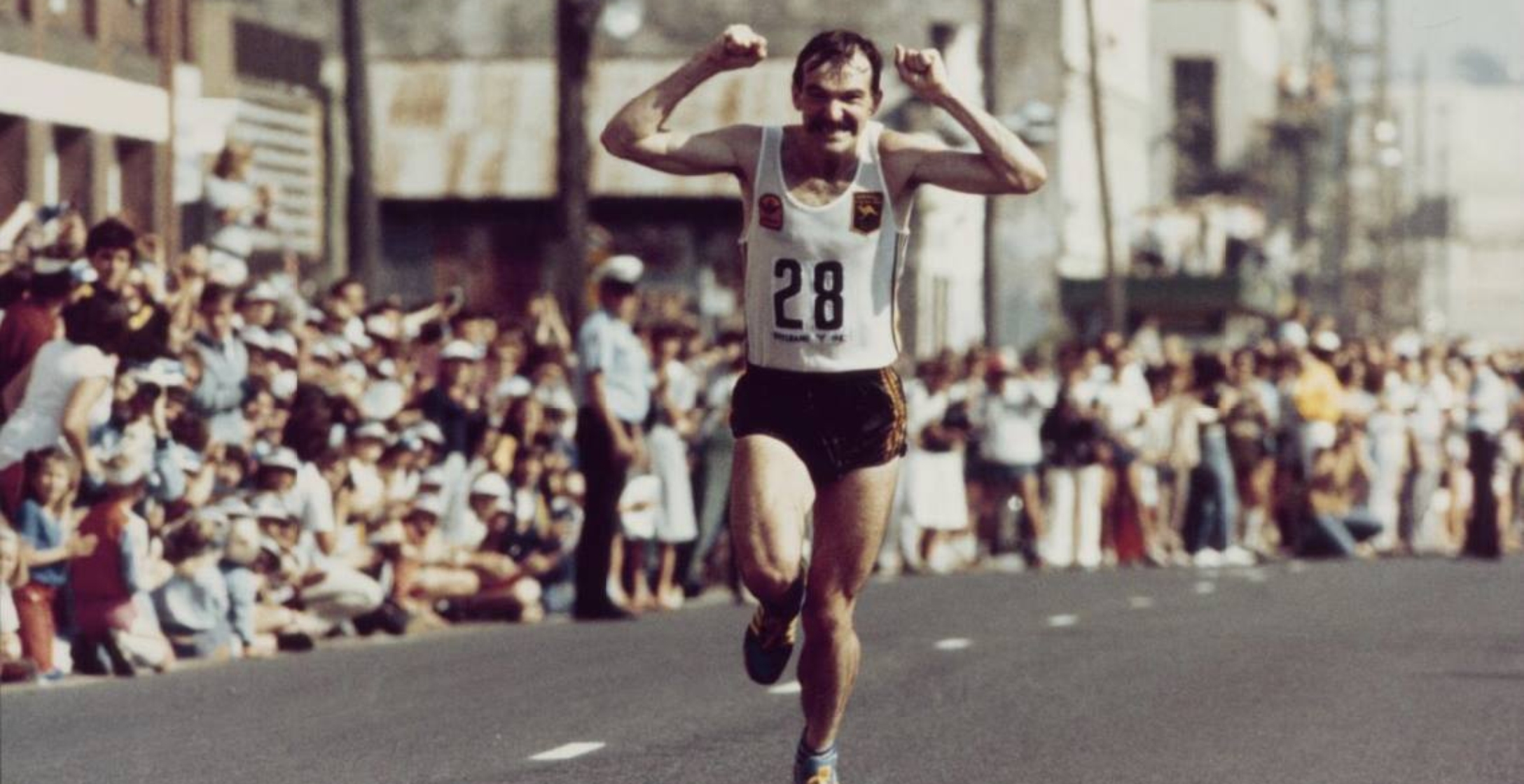
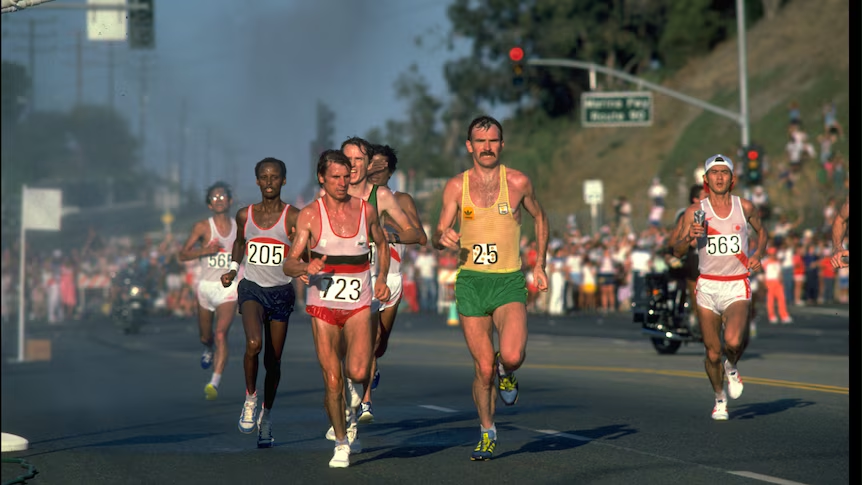
In the 1980’s, Robert de Castella won the Boston Marathon, two Commonwealth Games Marathon gold medals and a World Championships Marathon gold medal.
As recently as 2022, Jess Stenson continued this love affair with a gold medal at the Birmingham Commonwealth Games and even more recently Jessica Hull winning a Silver medal at the 2024 Paris Olympics in the 1500m.
Between these years we’ve had some great names in the sport, the likes of Steve Moneghetti, Benita Willis, Michael Shelley, Kerryn McCann and Craig Mottram dominate on the world stage.
But today, this blog isn’t about those runners; it’s about some of the distance running workouts they ran to get there and that inspired runners of all levels in Australia still regularly turn to.
To top it off, this is your lucky day! As well as some of the actual inventors of these sessions weighing in, some of the Coaching Experts in the RunDais network have added invaluable bits of advice so you can get the most out of each workout. Be sure to seek their advice for further guidance!
Deek’s Quarters
The Workout: 8x 400m @ 3km to 5km pace with a 200m float between.
Robert ‘Deek’ De Castella
Whether or not he was in the middle of a Marathon build, De Castella is known to run this workout weekly, year round. The idea of a float is that it isn’t a full recovery jog, that you’re still moving at a brisk pace, faster than what you’d typically jog.
Hotly debated over the years is whether you should start or finish with the 200m float, but the more common belief is that you start with a 200m float to roll into the first 400m repetition.
This workout ends up being 4.8km and is often used as a bit of an indicator of 5km shape, with the time it takes you to do the workout roughly indicating the time you’d likely be able to run a 5km race in.
Don’t allow the session to turn into a race. Be honest with yourself on the floats to ensure the reps stay strong and controlled. I use this more in a building phase where we are developing that aerobic base where effort is more important than hitting speeds.
A great 5km specific workout that really helps simulate that hurt you feel in a 5km race due to its continuous nature. I tend to program this workout 2-3weeks out from a goal 5km event or a hard parkrun hit-out. I encourage the athlete to start with the 200m float so they are not turning the last 400m rep into a 600m effort.
7 x National Finalist, Sub 4min Miler. 1:02:19 HM PB
“
I often use as an offload week session for my athletes. Especially when training for half’s and full marathon this session is low in volume but high in intensity and as with the Mona one of the best time for value sessions you can do. With offload week goals for my athletes to reduce volume but maintain intensity I find this a great workout to throw in. Plus it keeps my athletes super strong and maintains their strength without doing a high volume session.
Mona Fartlek
The Workout: (2x 90sec off 90sec recovery jog), (4x 1min off 1min recovery jog), (4x 30sec off 30sec recovery jog), (4x 15sec off 15sec recovery jog)
Steve ‘Mona’ Moneghetti
This workout is the brain child of Steve Moneghetti and his 2 time Olympian coach, Chris Wardlaw. A 20 minute workout that gets you moving through the gears; but make sure you don’t go out too hard! You want to leave room finish strong and the suffering really creeps up on you with this one!
You can take some liberties with the recoveries between the efforts, with some people running them much slower so they can turn the jets on for the efforts. Others prefer to treat the recovery as more of a float (like in Deek’s Quarters). This is where it’s great to chat to your coach about what your desired goal from the workout actually is.
7 x National Finalist, Sub 4min Miler. 1:02:19 HM PB
“
I use Mona Fartlek frequently in my training. Feel like it’s probably the best 20 minute session you’ll find. I love that the session is quite measurable and feel it gives a good indication of fitness. Also physiologically it’s an enjoyable session the fact you step down in reps means you can get some really solid work done but mentally it despite trying to go faster the shorter reps help you push through. Personally I like to run the session fairly consistent with the floats around marathon effort and the on’s around half marathon effort with an aim to finish the 15 seconds around 1500-3km effort.
2nd place at the Great Ocean Road Half Marathon, 2023
“
One of the best bang for buck workouts out there. Short, sharp reps which are great for leg turnover, plus it’s over in 20 minutes. An excellent session close to a race when you don’t want too much volume, but want to feel speedy. Also works well as a water running session in the pool, if that’s your cup of tea!
Mona Fartlek can be programmed in a variety of ways depending on the purpose of the workout and the phase of training an athlete is in.
It can be programmed as a VO2 max 5-10km specific session where you run the ‘ons’ at goal race effort and the ‘offs’ at a comfortable jogging pace. I generally use this type of Mona for runners in a race specific block of training or to sharpen up for a goal event.
If you are after a more threshold based workout you can run the ‘ons’ at or a tad faster than threshold and keep the ‘offs’ at an honest clip 20-40 secs slower than the ‘ons’. Running the session in this way works well in a base phase of training.
15min 5km. Has run most major fun run events in Australia
“
A great session I give to runners in ‘off season’. It touches on speed, is good bang for buck at 20 minutes total but it is also massively aerobic with equal recoveries that never feel enough.
The mona fartlek is such a bang for buck workout it’s only 20 minutes in total with only 10 minutes of hard running. It is practical and highly efficient. When you’re fit the general aim of it is to run the early reps at about 10K effort and keep the float strong and then as the reps get shorter to gradually try to make each set of shorter reps a little bit faster than the previous one. Floats are not a jog, they are at your fastest recovery pace. Throughout the session it is a real mental challenge as you get tired keep the floats even and to keep getting quicker in the reps. This challenge mimics the demands of a race, there’s always going to be purple patches and rough patches in a race, working on improving your mona fartlek helps you cope with these moments whether it’s running uphill, into a headwind, covering a surge, sprinting for the finish line. The psychological strength you get from mastering the mona fartlek is invaluable come race day. It’s a particularly great session for people trying to get better at the 5K. It’s also a fantastic bang for buck session; early days when an athlete is base building or coming back after an injury, as the active recovery, ensures that fitness limits the intensity of the faster reps. I also love prescribing modified versions of the mona to my runners in periods where I want them to have an easy session, doing the fartlek on an unfamiliar course, skipping certain parts of it eg, the 15 or 30sec reps and or slowing the reps down a touch. It works well in this situation as runners are less likely to get carried away with times, paces and intervals as comparison is hard. But even if you aren’t aiming for a 5k, all distance runners should try this gem of a session, there’s a reason mona fartlek is part of Aussie Distance Running history. If you nail a mona; you can be confident you are pretty fit, you are going well with pace judgement and psychologically you’re able to dig deep late when it counts….. all good signs for distance running performance.
8 x 1km
The Workout: 8x 1km efforts of 60 seconds recovery
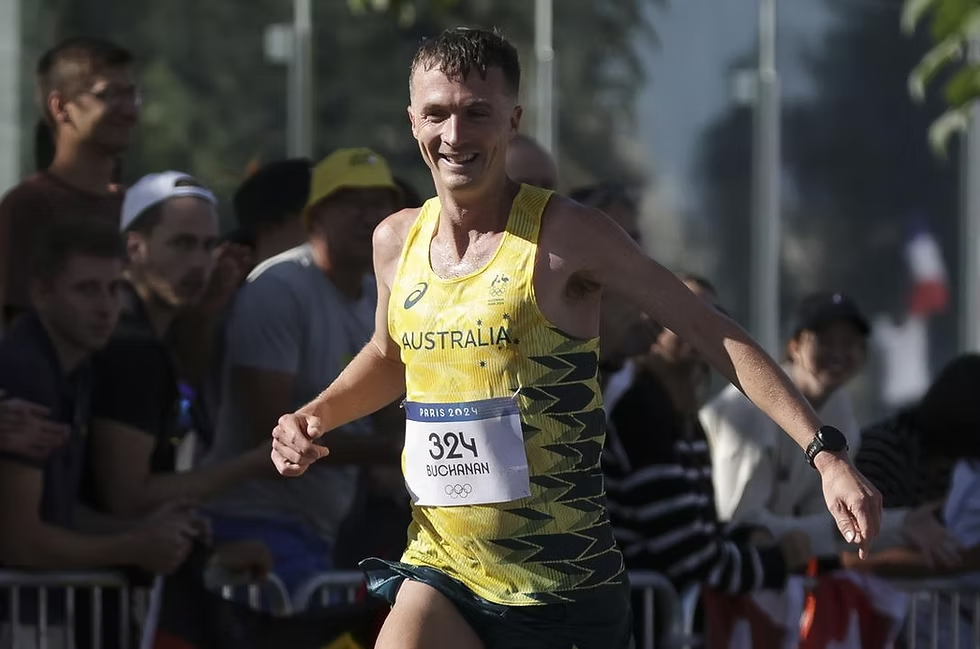
Australian All-Time Marathon Record Holder Andy Buchanan
A much simpler (to remember) workout than the previous two, but much more volume. This workout has long been favoured by Australian distance running coach of the Melbourne Track Club (MTC), Nic Bideau.
Former MTC athlete Stewart McSweyn told Athletics Weekly that these “Tuesday endurance reps” were his favourite workout, and credits a lot of his success to them.
The 60 seconds recovery can be taken standing/walking, or on a slow jog, with both options being taken by different members of MTC.
McSweyn would do this workout even as part of his 1500m to 5000m training alongside training partners preparing for the marathon, proving there is always room for strength and endurance workouts in training.
Australian All-Time Marathon Record Holder (2:06) and 2024 Olympian
“
One of my favourite sessions. A staple that I’d do monthly. A great session for any race distance that you are preparing for. You want to get to the end of the 4th rep still feeling in control and finish feeling like you could do 1-2 more reps if you absolutely had to. Changing the recovery time is a great way to get different stimulus from the session but I’ll mostly take 1’ stand/walking recovery.
Moose Fartlek
The Workout: 5 x (3min at roughly 10k/Half Marathon effort, followed by a 1min jog, and 1min at 5k effort with a 1min jog)
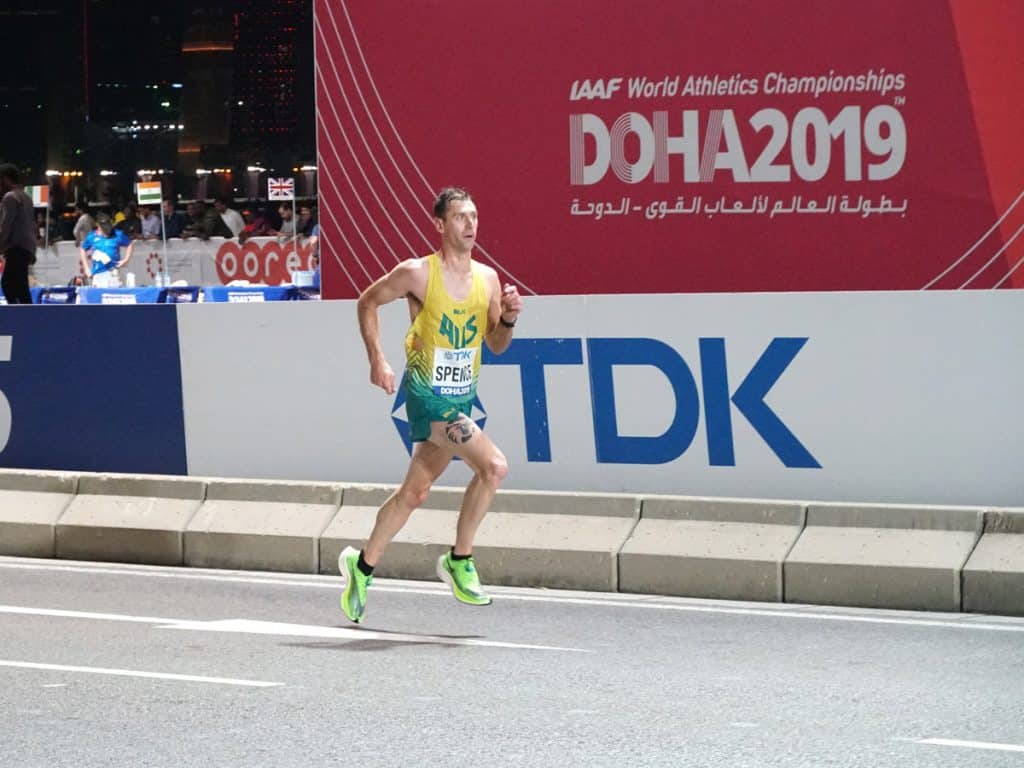
Julian Spence at the 2019 World Championships in Doha
This workout is a more recent one, ideated and named by Julian “Moose” Spence, co-host of the Inside Running Podcast, World Champs representative and 2:14 marathoner.
We reached out to Julian and he gave us these helpful Do’s and Don’ts for completing this workout:
JS
Julian Spence
2019 World Athletics Champs, 2:14 Marathoner
“
Do – use this workout year round
Don’t – run the 3min reps faster than 10km effort.
Do – run the 1min reps @ ~5k effort.
Don’t – limit this workout to flat tracks.
Do – Hit some hilly spots or trails to make it a XC type session.
The Workout (Mottram Style): 4 x 1600m (on a 400m track. Laps 1, 2 and 4 are at 5km race pace, and lap 3 is at 1500m to 3km pace) with a lap jog recovery
Craig Mottram taking it to best in the world
Another session by MTC coach Nic Bideau, this was one he’d originally given to Craig Mottram in preparation for 5000m races.
The key to nailing this session is to be realistic of your current fitness levels so that you can run the 3rd 400m much faster, while still hitting 5km pace for the final 400m.
Again, another session that feels easy to begin with, but quickly isn’t.
If you’re not sure what your 5km pace is, you can always try Deek’s Quarters (above) first to get an indication.
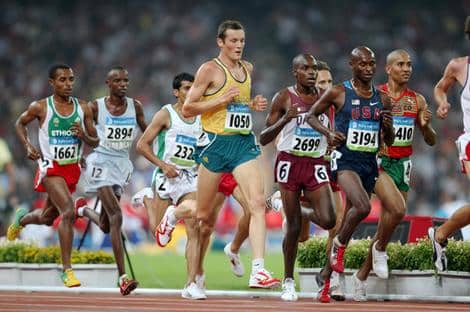
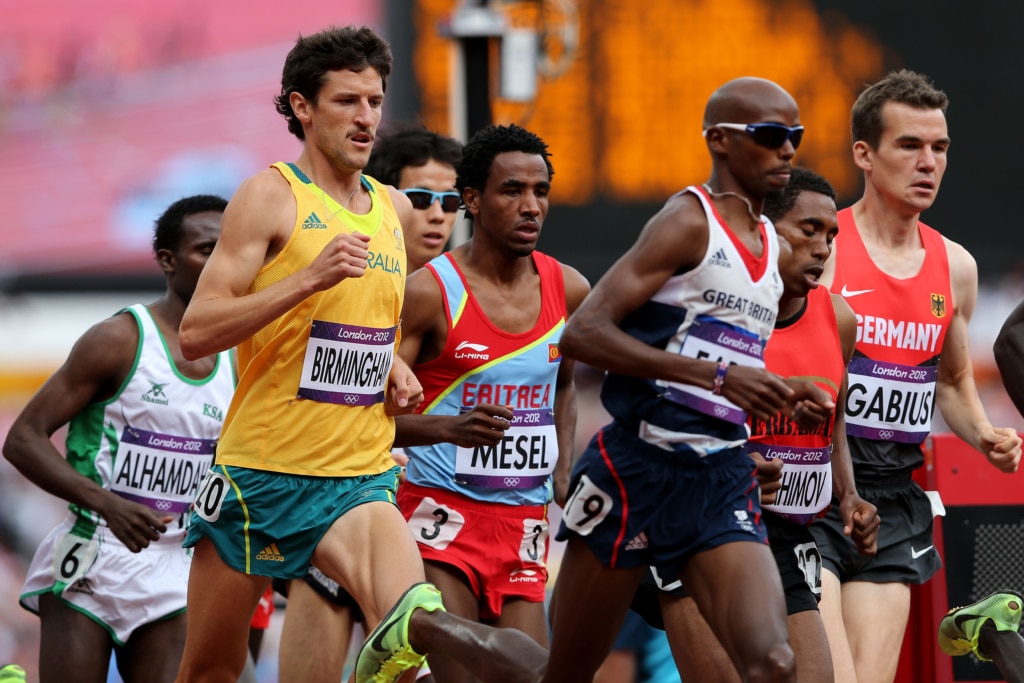
The Workout (Collis BirminghamStyle): 4 – 6 x 1600m (on a 400m track) alternating 1 lap fast, 1 lap float)
Collis at the 2012 Olynpic Games
Again, MTC coach Nic Bideau tailored a modified ‘mile reps’ session to one of his star athletes. This time, the focus is to change the pace every single lap! The slower laps are not a full recovery jog though, they’re a float. This float is a comfortably quick pace; one that allows your form to stay strong but is faster than the pace you’d typically jog at.
Both these sessions mimic real world racing: surge, settle, surge.
Diddy K Fartlek
The Workout: 3 mins, (2 x 2mins), (4 x 1min) with float recoveries, equal in length to the next rep.
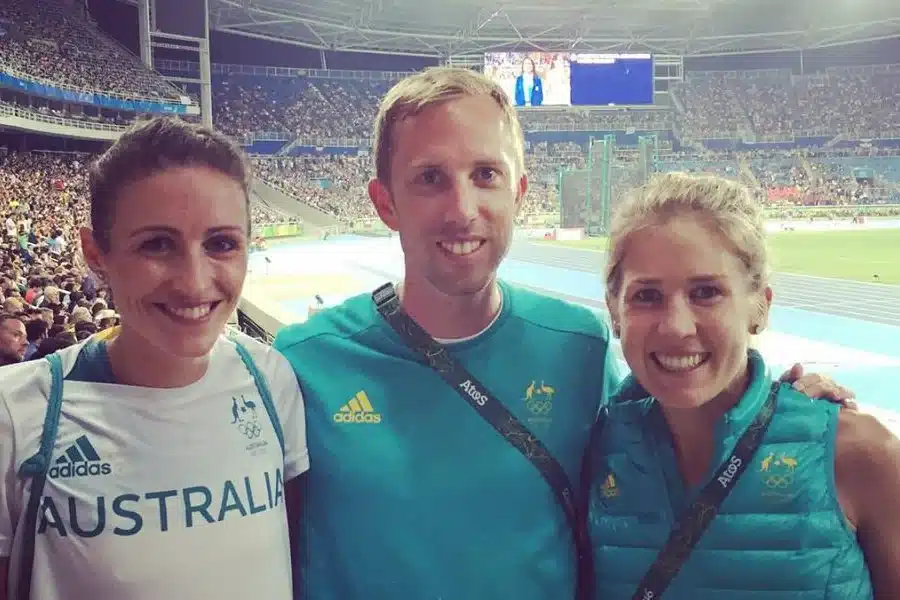
Adam, with Australian athletes Madeline Heiner (left) and Jess Stenson (right).
Named after South Australian coach Adam Didyk, this session deliberately forces you to change up your effort, to above and below threshold, much like it would in a race.
Another 20 minute workout very popular in more recent years in Australia.
We’re lucky enough to have Adam share the history and how to nail this section, so make sure you read that below:
AD
Adam Didyk
Olympic, Commonwealth Games & World Championship Team Coach
“
The Diddy K Fartlek started as an alternative 20-minute fartlek option when we were already using the Mona Fartlek in our session structure. We wanted a progression-based stimulus with intensity being sustained.
The name? Entirely accidental.
It dates back to my time as a Year 7 teacher. The students were writing rap lyrics for a poetry unit and students wanted to reference me in their verses. I agreed… on one condition: they had to use my rapper name — Diddy K.
Unfortunately for everyone involved, the name stuck.
And now here we are.
Yes, it’s deeply dorky.
No, I don’t exactly promote it aggressively.
Structurally, though, it’s solid 20min Fartlek.
Structure:
• 3 minutes (10k pace)
• 2 × 2 minutes (5k pace)
• 4 × 1 minute (3k pace)
• Recovery equals the duration of the next effort (e.g., 3min effort → 2min recovery, 2min effort → 2min then 1min recovery, etc.)
So it builds rhythm early, sharpens in the middle, and finishes with high-end turnover without tipping into chaos.
Dorky name.
Very usable session.
So whether you’re chasing a parkrun PB, wanting to feel stronger on your social long runs, or dreaming of pulling on the green and gold one day, why not test yourself with one of these legendary Australian sessions!
Just remember: sessions like these are high intensity and best placed within a structured training plan. Make sure you’re building gradually, training consistently, and listening to your body.
If you’re unsure where to start or how to pace them properly, connect with one of the trusted RunDais coaches HERE. The right guidance can turn a tough workout into real progress.
Written by Klay Hopgood
4 articles
•
Since 2025
Klay is one of the co-founders of Rundais. A lover of trails and numbers.